
The landscape of search engine optimization (SEO) is in constant flux, driven by technological advancements and evolving user behavior. Among the most significant recent developments is the rise of Search Generative Experience (SGE), powered by artificial intelligence (AI). This transformative technology is reshaping how information is discovered and consumed online. Understanding SGE and its implications is crucial for anyone involved in digital marketing, content creation, or website management.
Understanding SGE and AI Search
What is SGE (Search Generative Experience)?
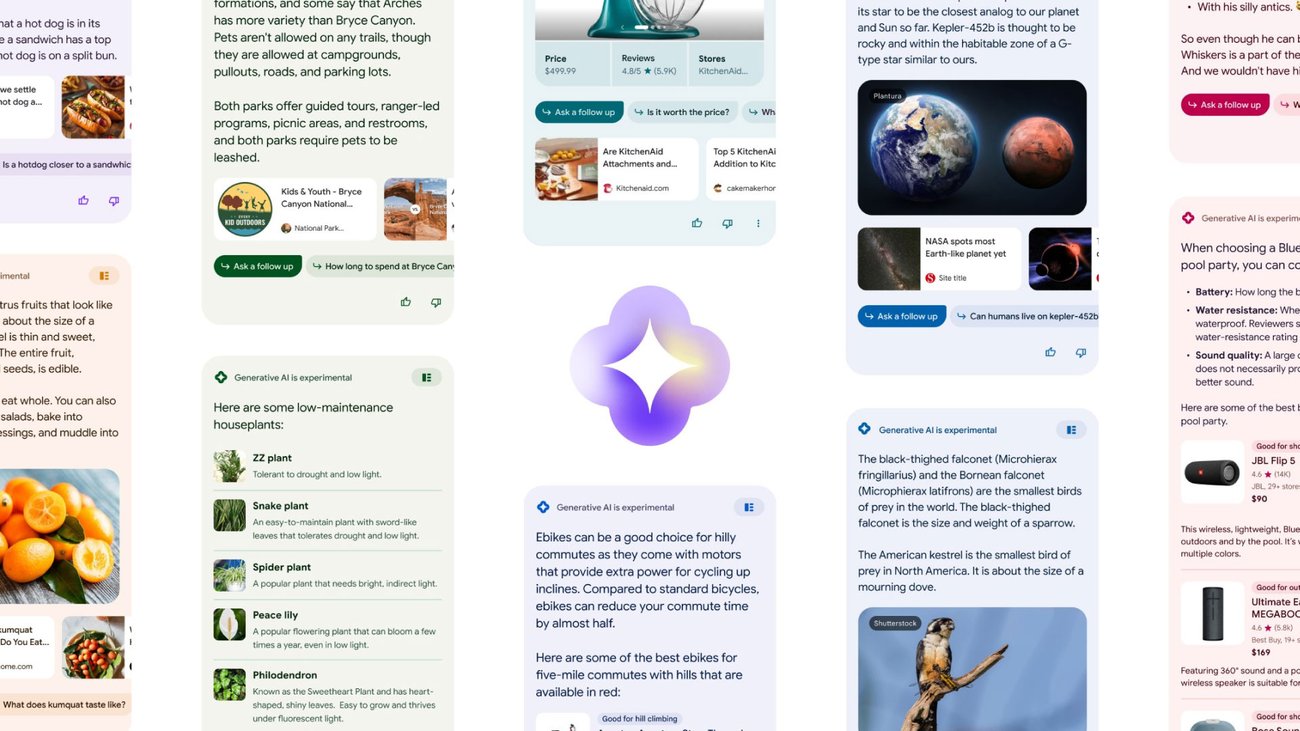
Search Generative Experience, or SGE, represents a paradigm shift in how search engines deliver results. Instead of simply providing a list of links, SGE leverages AI to generate concise, informative summaries directly within the search results page. These summaries, often accompanied by relevant images and links, aim to provide users with a quick overview of the topic they are searching for. This approach is designed to save users time and effort by presenting key information upfront.
SGE is not just about summarizing existing content; it also involves understanding the user's intent and context. By analyzing the search query and leveraging natural language processing (NLP), SGE can tailor the generated summary to the specific needs of the user. This level of personalization and relevance is a key differentiator from traditional search results.
How AI Powers Modern Search Engines
AI is the engine that drives SGE and other advanced search functionalities. Machine learning (ML) algorithms analyze vast amounts of data to identify patterns, understand relationships, and predict user behavior. These algorithms are trained on diverse datasets, including web pages, user interactions, and knowledge graphs, to improve their accuracy and effectiveness.
Here are some of the key AI technologies that power modern search engines:
- Natural Language Processing (NLP): Enables computers to understand and process human language.
- Machine Learning (ML): Allows systems to learn from data without explicit programming.
- Deep Learning: A subset of ML that uses neural networks with multiple layers to analyze complex data.
- Knowledge Graphs: Structured databases that store information about entities and their relationships.
These technologies work together to enable search engines to understand the meaning behind search queries, identify relevant content, and generate informative summaries.
The Evolution from Traditional Search
Traditional search engines primarily relied on keyword matching and link analysis to rank web pages. While these techniques are still relevant, they often fail to capture the nuances of human language and the intent behind search queries. SGE represents a significant step forward by incorporating AI to provide more contextually relevant and informative results.
The evolution from traditional search can be characterized by the following key changes:

Impact of SGE on SEO Strategies
The rise of SGE has profound implications for SEO strategies. Traditional SEO techniques, such as keyword stuffing and link building, are becoming less effective as search engines prioritize quality, relevance, and user experience. To succeed in the age of AI search, SEO professionals must adapt their strategies to focus on creating valuable content that meets the needs of users.
Keyword Research in the Age of AI Search
Keyword research remains a fundamental aspect of SEO, but the approach must evolve to account for AI-powered search. Instead of focusing solely on high-volume keywords, SEO professionals should prioritize understanding the intent behind search queries. This involves identifying the questions users are asking, the problems they are trying to solve, and the information they are seeking.
Here are some key considerations for keyword research in the age of AI search:
- Focus on Long-Tail Keywords: Long-tail keywords are longer, more specific phrases that reflect the user's intent.
- Analyze Search Intent: Understand the user's goal when searching for a particular keyword.
- Use Question Keywords: Target keywords that are phrased as questions.
- Consider Semantic Variations: Identify related terms and concepts that users might use to search for the same information.
By understanding the nuances of search intent, SEO professionals can create content that is more relevant and valuable to users, increasing the likelihood of ranking in SGE results.
Optimizing for Conversational Search Queries
With the increasing popularity of voice search and AI assistants, conversational search queries are becoming more common. These queries are typically longer, more natural-sounding, and more specific than traditional keyword-based searches. Optimizing for conversational search requires a different approach to content creation and SEO.
Here are some tips for optimizing for conversational search:
- Use Natural Language: Write content that sounds natural and conversational.
- Answer Common Questions: Identify and answer the questions that users are asking in their own words.
- Focus on Local SEO: Optimize for local search queries by including location-specific information in your content.
- Create Structured Data: Use schema markup to provide search engines with more information about your content.
By adapting to the nuances of conversational search, SEO professionals can improve their visibility in voice search results and attract more qualified traffic to their websites.
The Importance of E-E-A-T in AI-Driven Results
E-E-A-T, which stands for Experience, Expertise, Authoritativeness, and Trustworthiness, is a set of guidelines that Google uses to evaluate the quality of web pages. In the age of AI-driven search, E-E-A-T is more important than ever. Search engines are increasingly prioritizing content that is created by knowledgeable and trustworthy sources.
Here are some ways to improve your E-E-A-T:
- Demonstrate Expertise: Showcase your knowledge and skills in your content.
- Build Authority: Establish yourself as a trusted source of information in your industry.
- Earn Trust: Be transparent about your credentials and affiliations.
- Gain Experience: Share your real-world experiences and insights.
By focusing on E-E-A-T, SEO professionals can improve the credibility and trustworthiness of their content, increasing the likelihood of ranking in AI-driven search results.

Future Trends in AI Search
The field of AI search is constantly evolving, with new technologies and approaches emerging all the time. To stay ahead of the curve, SEO professionals must be aware of the future trends that are shaping the industry.
Personalized Search Experiences
AI is enabling search engines to deliver increasingly personalized search experiences. By analyzing user data, such as search history, location, and demographics, search engines can tailor results to the specific needs and preferences of each individual user. This level of personalization can improve user satisfaction and engagement, but it also raises concerns about privacy and filter bubbles.
One of the key trends in personalized search is the use of AI-powered recommendations. Search engines are increasingly recommending content that is relevant to the user's interests, even if they did not explicitly search for it. This can help users discover new information and resources, but it can also limit their exposure to diverse perspectives.
The Role of Voice Search and AI
Voice search is becoming increasingly popular, driven by the rise of AI assistants such as Siri, Alexa, and Google Assistant. Voice search queries are typically longer and more conversational than traditional text-based searches. This requires a different approach to content creation and SEO, as discussed earlier.
AI is playing a key role in improving the accuracy and effectiveness of voice search. NLP algorithms are used to understand the nuances of spoken language, while machine learning models are trained to recognize different accents and dialects. As AI technology continues to improve, voice search is likely to become even more prevalent.
Ethical Considerations in AI Search
The use of AI in search raises a number of ethical considerations. One of the key concerns is bias. AI algorithms are trained on data, and if that data is biased, the algorithms will also be biased. This can lead to unfair or discriminatory search results.
Another ethical consideration is transparency. It is often difficult to understand how AI algorithms make decisions, which can make it challenging to identify and correct biases. As AI becomes more prevalent in search, it is important to ensure that these algorithms are transparent and accountable.
Here are some ethical considerations in AI Search:
Addressing these ethical concerns is crucial to ensure that AI search is used in a responsible and beneficial way.
In conclusion, SGE and AI search represent a significant evolution in how information is discovered and consumed online. By understanding the underlying technologies and adapting SEO strategies accordingly, professionals can navigate this changing landscape and continue to deliver valuable content to users. Embracing AI-driven content strategies, focusing on E-E-A-T, and addressing ethical considerations will be key to success in the future of search.


Messenger