
In today's fast-paced digital landscape, content is king. Businesses and individuals alike are constantly seeking innovative ways to create high-quality, engaging content at scale. Enter the AI content generator, a revolutionary technology that is transforming the way we approach content creation. These tools leverage the power of artificial intelligence to automate and streamline the writing process, offering a plethora of benefits from increased efficiency to enhanced creativity.
This comprehensive guide delves into the world of AI content generators, exploring their history, current state, and future trends. We'll examine the impact of AI on content marketing, compare top platforms, and address the ethical considerations surrounding this rapidly evolving technology.
-4KVKZBOOZJI9Z.png)
The Rise of AI in Content Creation
A Brief History of AI Writing Tools
The journey of AI writing tools began in the mid-20th century with early experiments in machine translation and natural language processing (NLP). These initial attempts were rudimentary, often producing nonsensical or grammatically incorrect text. However, they laid the foundation for future advancements. By the late 20th century, rule-based systems emerged, using predefined rules to generate simple text. These systems were limited in their capabilities but demonstrated the potential of automated writing.
The real breakthrough came with the advent of machine learning, particularly deep learning, in the 21st century. Deep learning algorithms, trained on vast datasets of text and code, enabled AI models to understand and generate human-like text with increasing accuracy and fluency. This led to the development of sophisticated AI writing tools capable of producing a wide range of content, from blog posts to marketing copy.
Current State of AI Content Generation Technology
Today's AI content generation technology is characterized by its versatility and sophistication. Powered by advanced NLP models like GPT-3 and its successors, these tools can perform a variety of tasks, including:
- Generating original articles and blog posts
- Writing compelling marketing copy and ad headlines
- Creating engaging social media content
- Summarizing lengthy documents
- Answering questions and providing information
These tools are not only capable of generating text but also of adapting to different writing styles and tones. They can analyze existing content and learn to mimic the style of a particular author or brand. Furthermore, many AI content generators offer features like keyword optimization and plagiarism checking, ensuring that the generated content is both high-quality and SEO-friendly.
The accessibility of AI content generation technology has also increased dramatically. Numerous platforms offer user-friendly interfaces and affordable pricing plans, making these tools available to businesses and individuals of all sizes.
The Impact of AI on Content Marketing
The rise of AI content generators has had a profound impact on content marketing. By automating many of the time-consuming tasks associated with content creation, these tools have enabled marketers to:
- Produce more content in less time
- Reduce content creation costs
- Improve content quality and consistency
- Personalize content for different audiences
- Optimize content for search engines
AI can assist marketers with tasks such as:
- Idea generation: Identifying trending topics and keywords
- Content planning: Creating content calendars and outlines
- Writing and editing: Generating drafts and refining existing content
- Distribution: Scheduling and publishing content across multiple channels
- Analysis: Tracking content performance and identifying areas for improvement
However, it's important to note that AI is not a replacement for human creativity and expertise. The most effective content marketing strategies involve a combination of AI-powered automation and human oversight.
Highlighing the fact, AI tools can generate content quickly, but human editors are still needed to ensure accuracy, relevance, and originality.
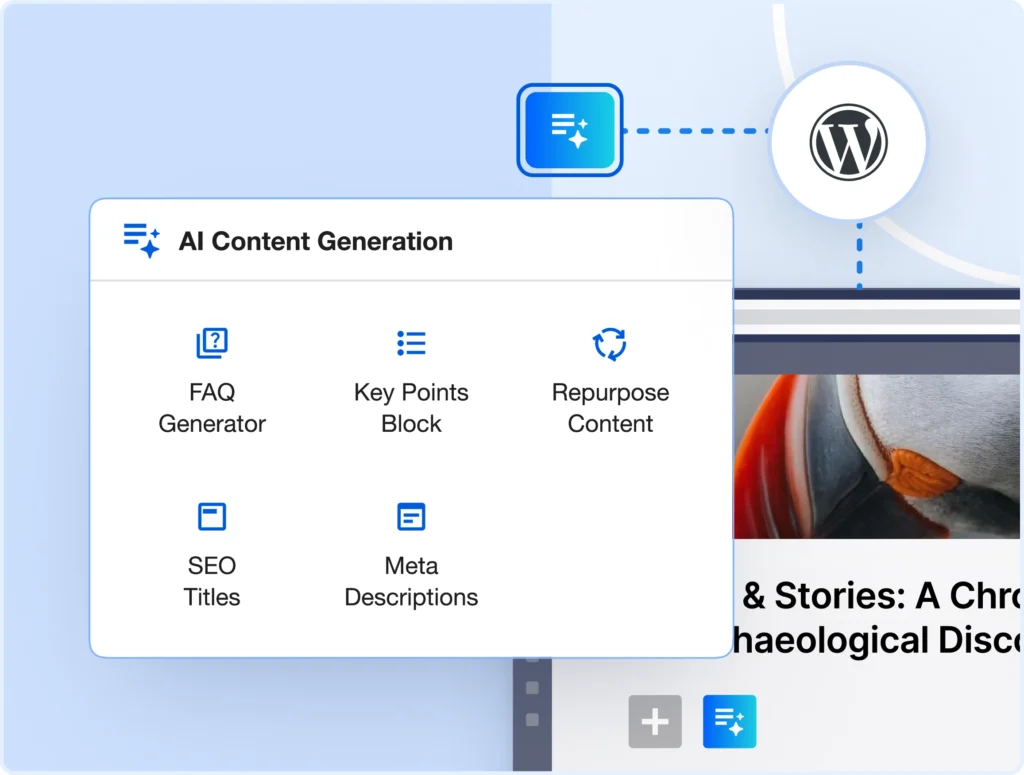
Top AI Content Generator Platforms
Overview of Popular AI Writing Tools
The market for AI writing tools is crowded, with numerous platforms vying for users' attention. Some of the most popular and well-regarded options include:
- Jasper: Known for its versatility and high-quality output.
- Copy.ai: Offers a wide range of templates and tools for different content types.
- Rytr: An affordable option with a user-friendly interface.
- Scalenut: Focuses on SEO-optimized content generation.
- Writesonic: Provides a comprehensive suite of AI-powered writing tools.
Each of these platforms has its strengths and weaknesses. Jasper, for example, is praised for its ability to generate creative and engaging content, while Copy.ai is valued for its extensive library of templates.
It's important to carefully evaluate your needs and priorities before choosing an AI writing tool. Consider factors like the types of content you need to create, your budget, and your technical expertise.
Features and Pricing Comparison
AI content generator platforms offer a wide array of features, including:
- Content generation: The ability to generate original articles, blog posts, and marketing copy.
- Template libraries: Pre-built templates for different content types.
- SEO optimization: Tools for keyword research and content optimization.
- Plagiarism checking: Features to ensure the originality of the generated content.
- Tone and style customization: Options to adjust the tone and style of the generated text.
- Integration with other tools: Compatibility with marketing automation platforms and other software.
Pricing varies significantly across platforms. Some offer free trials or limited free plans, while others require monthly or annual subscriptions. The cost of a subscription typically depends on the number of words or articles you can generate per month.
When comparing pricing, consider the features included in each plan and the potential return on investment. A more expensive platform may be worth the cost if it offers features that significantly improve your content marketing results.
User Reviews and Ratings
User reviews and ratings can provide valuable insights into the strengths and weaknesses of different AI content generator platforms. Websites like G2, Capterra, and Trustpilot offer user reviews and ratings for a wide range of software products, including AI writing tools. When reading reviews, pay attention to:
- Overall satisfaction: The overall rating of the platform.
- Ease of use: How easy the platform is to learn and use.
- Quality of output: The quality of the content generated by the platform.
- Customer support: The responsiveness and helpfulness of the platform's customer support team.
- Value for money: Whether the platform is worth the cost.
It's also helpful to read reviews from users who have similar needs and use cases to your own. This can help you determine whether a particular platform is a good fit for your specific requirements.
Highlighting the fact, user reviews frequently mention Jasper's high-quality output and Copy.ai's extensive template library.
Future Trends in AI Content Generation
Advancements in Natural Language Processing
The future of AI content generation is closely tied to advancements in natural language processing (NLP). As NLP models become more sophisticated, AI writing tools will be able to generate content that is even more human-like, creative, and engaging.
Some of the key trends in NLP include:
- Larger and more powerful language models: The trend towards larger language models, like GPT-4 and beyond, is expected to continue. These models will be able to understand and generate text with even greater accuracy and fluency.
- Improved contextual understanding: Future NLP models will be better at understanding the context of a conversation or document, allowing them to generate more relevant and coherent content.
- Multilingual capabilities: AI writing tools will become increasingly proficient in multiple languages, enabling businesses to create content for global audiences.
- Integration with other AI technologies: AI writing tools will be integrated with other AI technologies, such as image recognition and voice synthesis, to create more immersive and engaging content experiences.
Personalization and Customization
Personalization and customization are becoming increasingly important in content marketing. Consumers are more likely to engage with content that is tailored to their specific interests and needs. AI content generators can help marketers personalize content at scale by:
- Analyzing customer data: AI can analyze customer data to identify patterns and preferences.
- Generating personalized content: AI can generate content that is tailored to the specific interests and needs of individual customers.
- Optimizing content for different channels: AI can optimize content for different channels, such as email, social media, and websites.
Future AI writing tools will offer even more advanced personalization capabilities, allowing marketers to create truly unique and engaging content experiences for each customer.
Highlighting the fact, AI can analyze customer data to tailor content, increasing engagement and conversion rates.
Ethical Considerations and Challenges
The rapid advancement of AI content generation technology raises a number of ethical considerations and challenges. These include:
- Plagiarism: AI-generated content can sometimes inadvertently plagiarize existing content. It's important to use plagiarism checking tools to ensure the originality of the generated content.
- Bias: AI models can be biased based on the data they are trained on. This can lead to the generation of content that is discriminatory or offensive.
- Misinformation: AI can be used to generate fake news and misinformation. It's important to be critical of AI-generated content and to verify its accuracy.
- Job displacement: The rise of AI content generation technology could lead to job displacement for writers and editors.
Addressing these ethical considerations and challenges will require a collaborative effort from developers, policymakers, and the public. It's important to develop guidelines and regulations that promote the responsible use of AI content generation technology.

AI content generation is transforming how we create and optimize content. By understanding its strengths, limits, and ethical considerations, marketers can use these tools to enhance creativity and improve results. As AI evolves, content creators who stay informed and adaptable will gain a competitive edge. The future of content is powered by AI—but elevated by human ingenuity.


Messenger