
In today's fast-paced digital landscape, content creation is more critical than ever. As businesses strive to connect with their target audiences, the demand for high-quality, engaging content continues to surge. This has led to the rapid evolution of content marketing strategies and the emergence of innovative tools designed to streamline the content creation process. Among these, AI content writing tools have emerged as a game-changer, promising to revolutionize the way content is created and consumed. This article explores the rise of AI in content creation, its key features, and its potential impact on the future of content marketing.
The Rise of AI in Content Creation
The Evolution of Content Marketing
Content marketing has undergone a significant transformation over the past decade. Initially, it was about creating basic website content and blog posts to improve search engine rankings. However, as algorithms evolved and user expectations increased, content marketing became more sophisticated. Today, it involves creating a diverse range of content types – including blog posts, articles, videos, infographics, and social media updates – tailored to specific audience segments and designed to achieve specific business goals.
The evolution of content marketing can be attributed to several factors:
- Changes in search engine algorithms: Google's algorithms, such as Panda and Penguin, emphasized the importance of high-quality, original content.
- Rise of social media: Social media platforms became essential channels for content distribution and engagement.
- Increased user expectations: Users now expect personalized, relevant, and valuable content.
- Proliferation of devices: Content needs to be optimized for various devices, including desktops, smartphones, and tablets.
As content marketing became more complex, marketers began to seek tools and technologies to help them streamline their efforts and improve their results. This led to the emergence of various content marketing platforms, analytics tools, and, more recently, AI-powered content writing tools.
AI's Impact on Content Strategy
Artificial intelligence (AI) is rapidly transforming various aspects of business, and content marketing is no exception. AI-powered tools are now capable of performing tasks that were once exclusively the domain of human writers and marketers. These tasks include:
- Content generation: AI can generate entire articles, blog posts, and social media updates based on specific keywords and topics.
- Content optimization: AI can analyze existing content and provide recommendations for improving its SEO performance.
- Content personalization: AI can personalize content based on user data and preferences.
- Content distribution: AI can automate the process of distributing content across various channels.
AI's impact on content strategy is profound. By automating many of the time-consuming and repetitive tasks associated with content creation, AI allows marketers to focus on more strategic activities, such as:
- Developing a comprehensive content strategy: AI can help marketers identify the most relevant topics, keywords, and content formats for their target audience.
- Creating high-quality, engaging content: While AI can generate content, human writers are still needed to refine and polish it.
- Measuring and analyzing content performance: AI can track key metrics and provide insights into what's working and what's not.
- Building relationships with influencers: AI can help marketers identify and connect with influencers in their niche.
Overall, AI is empowering marketers to create more effective content strategies and achieve better results.
Current State of AI Content Writing Tools
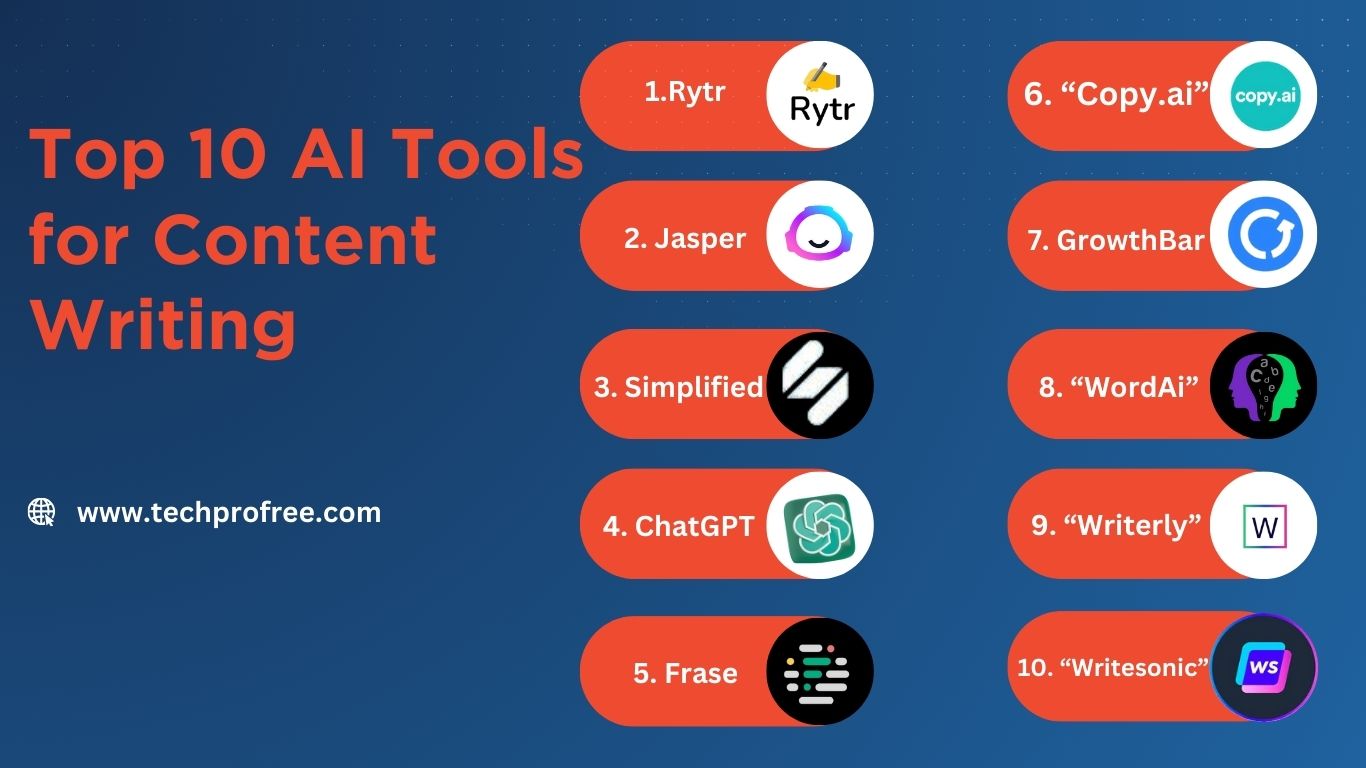
The market for AI content writing tools is rapidly growing, with new tools and platforms emerging all the time. These tools vary in terms of their features, capabilities, and pricing. Some of the leading AI content writing tools include:
- **Jasper:** A popular AI writing assistant that can generate various types of content, including blog posts, articles, and social media updates.
- **Copy.ai:** An AI-powered copywriting tool that can help marketers create compelling ad copy, website copy, and email copy.
- **Rytr:** A versatile AI writing tool that can generate content in multiple languages and tones.
- **Article Forge:** An AI content generator that can create entire articles from scratch.
- **Scalenut:** An AI-powered SEO platform that includes content writing capabilities.
These tools use natural language processing (NLP) and machine learning (ML) algorithms to understand and generate human-like text. They can analyze vast amounts of data, identify patterns, and create content that is relevant, engaging, and optimized for search engines. However, it's important to note that AI content writing tools are not a replacement for human writers. They are best used as a tool to augment and enhance human creativity and productivity.
Key Features and Functionalities
Content Generation Capabilities
One of the primary features of AI content writing tools is their ability to generate content automatically. These tools can produce various types of content, including:
- Blog posts and articles
- Website copy
- Social media updates
- Email newsletters
- Product descriptions
- Ad copy
The content generation process typically involves the following steps:
The quality of the generated content can vary depending on the AI tool and the input provided. However, most tools are capable of producing content that is grammatically correct, relevant, and engaging. It is also important to check for plagiarism and factual correctness. These tools can be especially useful for generating initial drafts or overcoming writer's block.
SEO Optimization Features
In addition to content generation, many AI content writing tools also offer SEO optimization features. These features can help marketers improve the search engine rankings of their content. Some common SEO optimization features include:
- Keyword research: AI tools can help marketers identify the most relevant keywords for their target audience and industry.
- Keyword optimization: AI tools can analyze existing content and provide recommendations for optimizing it for specific keywords.
- Content structure optimization: AI tools can suggest improvements to the structure and organization of content to make it more readable and SEO-friendly.
- Meta description optimization: AI tools can generate compelling meta descriptions that can improve click-through rates from search engine results pages (SERPs).
- Link building: Some AI tools can even assist with link building by identifying potential link partners and automating outreach.
By using AI-powered SEO optimization features, marketers can save time and effort while improving the visibility of their content in search engines. These tools can help ensure that content is not only well-written but also optimized for search, increasing its chances of ranking higher and attracting more organic traffic.
Grammar and Style Checking
Another important feature of AI content writing tools is their ability to check grammar and style. These tools can identify and correct errors in grammar, spelling, punctuation, and style. They can also provide suggestions for improving the clarity, conciseness, and overall quality of the writing.
Most AI content writing tools use NLP algorithms to analyze the text and identify potential errors. They can also be customized to follow specific style guides, such as the Associated Press (AP) style or the Chicago Manual of Style. By using AI-powered grammar and style checking features, writers can ensure that their content is error-free and meets the highest standards of quality. This is particularly useful for businesses that need to maintain a consistent brand voice and tone across all their content.
Future of AI Content Writing
Advancements in Natural Language Processing
The future of AI content writing is closely tied to advancements in natural language processing (NLP). NLP is a branch of AI that deals with the interaction between computers and human language. As NLP technology continues to evolve, AI content writing tools will become even more sophisticated and capable.
Some of the key areas of NLP research that are relevant to AI content writing include:
- Text generation: Improving the quality and coherence of AI-generated text.
- Sentiment analysis: Accurately identifying the sentiment expressed in text.
- Topic modeling: Automatically identifying the main topics discussed in a document.
- Machine translation: Translating text from one language to another with greater accuracy.
- Question answering: Answering questions based on information extracted from text.
As NLP technology advances, AI content writing tools will be able to generate content that is more human-like, relevant, and engaging. They will also be able to perform more complex tasks, such as summarizing long documents, answering questions, and translating text into multiple languages.

The Role of AI in Personalized Content
Personalization is becoming increasingly important in content marketing. Consumers now expect brands to deliver content that is tailored to their individual needs and interests. AI can play a key role in enabling personalized content experiences. By analyzing user data, such as demographics, browsing history, and purchase behavior, AI can identify individual preferences and create content that is relevant to each user.
Some of the ways that AI can be used to personalize content include:
- Personalized recommendations: Suggesting content that is likely to be of interest to a particular user.
- Dynamic content: Adjusting the content of a web page or email based on user data.
- Personalized email marketing: Sending emails that are tailored to the individual interests of each subscriber.
- Personalized product descriptions: Creating product descriptions that highlight the features and benefits that are most relevant to a particular user.
By using AI to personalize content, marketers can improve engagement, increase conversion rates, and build stronger relationships with their customers.
Predictions for the Future of Content Creation
The future of content creation is likely to be shaped by several key trends:
- Increased use of AI: AI will become an increasingly integral part of the content creation process.
- Greater emphasis on personalization: Content will become more personalized and tailored to individual user needs.
- Rise of immersive content: Virtual reality (VR) and augmented reality (AR) will create new opportunities for immersive content experiences.
- Focus on quality over quantity: Marketers will prioritize creating high-quality, engaging content over producing large volumes of content.
- Integration of content and commerce: Content will be increasingly integrated with commerce, making it easier for consumers to purchase products and services directly from content.
In this future, AI content writing tools will play a crucial role in helping marketers create and deliver personalized, engaging content at scale. However, human creativity and expertise will still be essential for ensuring that content is high-quality, original, and aligned with brand values.
AI content writing tools are reshaping content creation by automating tasks, improving SEO, and enabling personalized experiences. As NLP continues to advance, these tools will become even more powerful. While AI can’t replace human creativity, it acts as a valuable assistant that helps teams produce high-quality content faster and more efficiently. Today, leveraging AI is essential for staying competitive—what matters is using it to elevate, not replace, the human touch in storytelling and strategy.


Messenger