
In the rapidly evolving landscape of digital marketing, content remains king. However, with the sheer volume of content being produced daily, standing out from the crowd requires more than just creativity; it demands data-driven insights. This is where the AI content score comes into play. By leveraging the power of artificial intelligence, marketers can now assess the quality, relevance, and potential impact of their content before it even reaches their audience. This article delves into the intricacies of AI content scoring, exploring its underlying algorithms, practical applications, and future implications for content marketing strategies.
AI Content Score: A Deep Dive
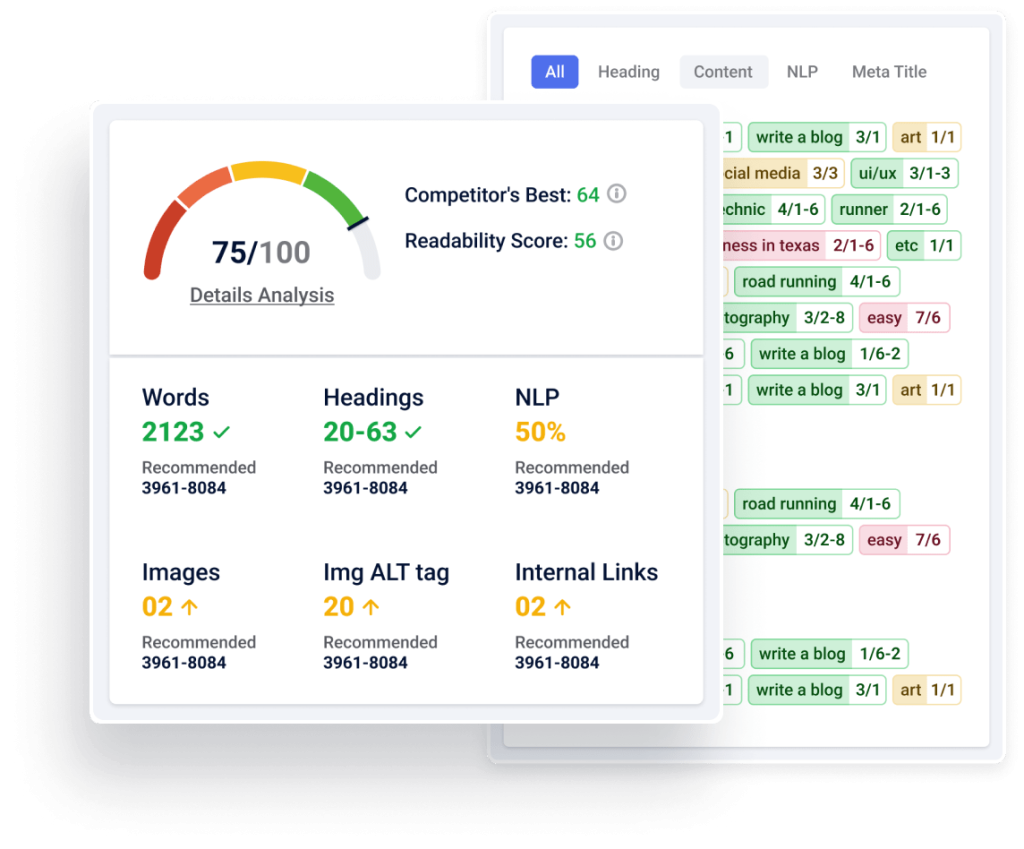
The AI content score is a metric generated by artificial intelligence algorithms that analyzes various aspects of a piece of content, such as its readability, originality, SEO friendliness, and potential for engagement. It provides a quantitative assessment, helping content creators understand the strengths and weaknesses of their work.
The Algorithm Behind the Score
The algorithms that power AI content scoring are complex and multifaceted, often relying on techniques from natural language processing (NLP) and machine learning. These algorithms typically consider the following factors:
- Readability: Assessed using metrics like the Flesch-Kincaid readability test, ensuring the content is easily understood by the target audience.
- Originality: Checked against a vast database of existing content to identify plagiarism or duplication.
- Keyword Density and Relevance: Evaluated to ensure the content is optimized for relevant search terms without being overly stuffed with keywords.
- Sentiment Analysis: Determines the emotional tone of the content, ensuring it aligns with the intended message.
- Engagement Potential: Predicted based on factors like headline effectiveness, use of visuals, and overall structure.
These factors are weighted differently depending on the specific algorithm and the goals of the content. For example, a blog post aimed at generating leads might prioritize keyword relevance and engagement potential, while a white paper might focus on readability and originality.
Different Types of AI Content Scorers
Several AI-powered tools offer content scoring functionalities, each with its unique strengths and features. These tools can be broadly categorized as follows:
- SEO Optimization Tools: Focus primarily on optimizing content for search engines, providing scores based on keyword usage, meta descriptions, and other SEO-related factors.
- Content Quality Analyzers: Emphasize the overall quality of the content, assessing factors like grammar, style, and readability.
- Engagement Predictors: Aim to predict how well the content will resonate with the target audience, considering factors like emotional tone and visual appeal.
- Plagiarism Checkers: Primarily focus on identifying instances of plagiarism or content duplication.
Examples of popular AI content scoring tools include Surfer SEO, Grammarly, and MarketMuse. Each tool offers a different set of features and scoring methodologies, so it's essential to choose one that aligns with your specific needs and goals.
Limitations of AI Content Scoring
While AI content scoring offers valuable insights, it's important to acknowledge its limitations. AI algorithms are only as good as the data they are trained on, and they may not always accurately capture the nuances of human language and creativity. Some specific limitations include:
- Lack of Contextual Understanding: AI algorithms may struggle to understand the context of the content, leading to inaccurate scores.
- Bias in Training Data: If the training data is biased, the algorithm may produce biased scores.
- Over-reliance on Metrics: Focusing solely on the AI content score can lead to formulaic content that lacks originality and creativity.
- Inability to Assess Subjective Qualities: AI algorithms may struggle to assess subjective qualities like humor, wit, and emotional impact.
It's crucial to view the AI content score as a tool to inform and guide content creation, not as the ultimate arbiter of quality. Human judgment and creativity remain essential components of effective content marketing.
Applying AI Content Score in Practice
The real power of AI content scoring lies in its practical application. By integrating it into your content creation workflow, you can significantly improve the effectiveness of your content marketing efforts.
Content Strategy Development
AI content scoring can play a crucial role in developing a data-driven content strategy. By analyzing existing content and identifying high-performing topics and keywords, you can gain valuable insights into what resonates with your target audience. This information can then be used to inform your content calendar and guide your future content creation efforts. For example, identifying high-performing keywords can help you focus on topics that are likely to attract organic traffic and generate leads.
Here's how to use AI content scoring in content strategy development:
Content Optimization Techniques
AI content scoring can also be used to optimize individual pieces of content for maximum impact. By analyzing factors like readability, keyword density, and sentiment, you can fine-tune your content to improve its performance. For example, if the AI content score indicates that your content is too difficult to read, you can simplify your language and shorten your sentences. Similarly, if the score suggests that your content is not optimized for relevant keywords, you can incorporate those keywords more strategically.
Some specific content optimization techniques include:
- Improving Readability: Using simpler language, shorter sentences, and bullet points to make the content easier to understand.
- Optimizing Keyword Usage: Incorporating relevant keywords naturally throughout the content, including in the title, headings, and body text.
- Enhancing Visual Appeal: Adding images, videos, and other visuals to make the content more engaging.
- Crafting Compelling Headlines: Writing headlines that are attention-grabbing and accurately reflect the content of the article.
- Adding Calls to Action: Including clear and concise calls to action that encourage readers to take the desired next step.
Performance Monitoring and Adjustment
Once your content is published, it's important to monitor its performance and make adjustments as needed. AI content scoring can help you track key metrics like traffic, engagement, and conversions, allowing you to identify areas for improvement. For example, if you notice that a particular piece of content is not generating the desired results, you can use AI content scoring to identify potential issues and make necessary adjustments.
Regular monitoring and adjustment are essential for maximizing the return on investment (ROI) of your content marketing efforts. By continuously analyzing your content and making data-driven improvements, you can ensure that it continues to perform well over time. Use SEO content optimization techniques to improve content ranking.
The Future of AI Content Scoring
The field of AI content scoring is constantly evolving, with new technologies and techniques emerging all the time. As AI algorithms become more sophisticated, they will be able to provide even more accurate and insightful assessments of content quality and potential impact.
Emerging Trends in AI Content Analysis
Some of the emerging trends in AI content analysis include:
- Advanced Sentiment Analysis: Moving beyond basic positive/negative sentiment to understand more nuanced emotions and attitudes.
- Contextual Understanding: Developing algorithms that can better understand the context of the content and the intent of the author.
- Personalized Scoring: Tailoring the AI content score to the specific needs and preferences of individual users.
- Integration with Content Creation Tools: Embedding AI content scoring directly into content creation platforms to provide real-time feedback.
- Predictive Analytics: Using AI to predict the long-term performance of content based on various factors.
These trends suggest that AI content scoring will become an even more integral part of the content creation process in the future.
Impact on Content Marketing Strategies
The continued development of AI content scoring will have a significant impact on content marketing strategies. Marketers will be able to make more data-driven decisions about what content to create, how to optimize it, and how to measure its success. This will lead to more effective content marketing campaigns that generate higher ROI.
Some specific ways that AI content scoring will impact content marketing strategies include:
- Greater Focus on Quality: AI content scoring will incentivize marketers to create higher-quality content that is more engaging and informative.
- Improved SEO Performance: AI-powered optimization will help marketers improve their search engine rankings and attract more organic traffic.
- Enhanced Personalization: AI will enable marketers to create more personalized content experiences that resonate with individual users.
- More Efficient Content Creation: AI-powered automation will streamline the content creation process, allowing marketers to produce more content in less time.
- Better Measurement of Results: AI will provide more accurate and comprehensive metrics for measuring the success of content marketing campaigns.
However, relying solely on AI writing tools may lead to generic contents. Human oversight is still important to keep the content fresh and unique.
Ethical Considerations of AI in Content
As AI plays an increasingly prominent role in content creation and analysis, it's important to consider the ethical implications. Some potential ethical concerns include:
- Bias and Discrimination: AI algorithms can perpetuate bias and discrimination if they are trained on biased data.
- Misinformation and Propaganda: AI can be used to generate and spread misinformation and propaganda.
- Job Displacement: The automation of content creation could lead to job displacement for writers and editors.
- Lack of Transparency: The inner workings of AI algorithms can be opaque, making it difficult to understand how they arrive at their conclusions.
- Copyright Infringement: AI-generated content may infringe on existing copyrights.
It's essential to address these ethical concerns proactively to ensure that AI is used responsibly in content marketing. Use natural language processing (NLP) responsibly in content creation.
The AI content score is a powerful tool that can help marketers create more effective content. By understanding its underlying algorithms, practical applications, and limitations, you can leverage its potential to improve your content marketing strategies and achieve your business goals. Always remember to balance data-driven insights with human creativity and ethical considerations to ensure that your content is both effective and responsible. As the field of AI-driven content creation continues to evolve, staying informed about the latest trends and best practices will be crucial for success.


Messenger